
Jakub Gurgul – Computer Science Student at Silesian University of Technology | Leader of the Silesian Phoenix Project
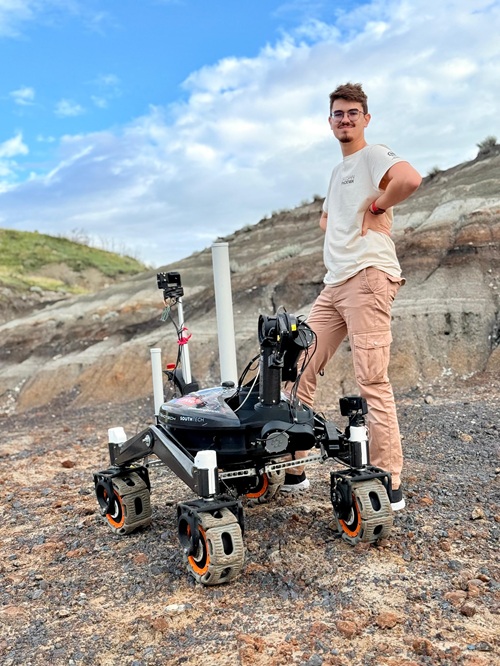
From a student club to building Mars rovers
Have you finished your studies?
I'm still studying; I'm in the final semester of my Master's program.
What program are you studying?
Computer Science – practical profile. That's why I have one extra semester compared to the standard program, so in total 7+4 semesters. One semester is spent at a company to gain practical experience. I've already completed that stage and am now finishing my final internship and Master's thesis.
Why did you choose computer science?
I'm a computer technician, and I wanted to continue developing in this field. I come from Gliwice and had heard many positive things about Silesian University of Technology, so I decided to study here. I chose the practical profile because it matched my interests.
What makes this university special?
The university provides many opportunities for development. When we meet students from other science clubs working on similar projects, I see how helpful and open the deans, rector, and department heads are. You can always count on support – both financial and substantive. Cooperation with companies allows us to gain real-world experience, so after graduation, we can demonstrate concrete skills.
Do you collaborate with foreign universities?
Yes, we operate within the Eureca-Pro initiative. Sometimes we work on projects in mixed teams – some students from Silesian University of Technology, some from abroad. These projects are easier to get funded, and international cooperation and exchange of experience are always valuable.
You are the president of a student club. What do you do, and what are your achievements?
Our club has been active for less than a year. We run the Silesian Phoenix project – we design and build mobile robots, including Mars rovers, which we then present at international student competitions. Our first competition was in Turkey in 2023, where we placed 8th. In subsequent years, we competed in Canada – this year we took 6th place out of 30 teams at the Canadian International Rover Challenge. We were the only European representatives there.
"This year we took 6th place out of 30 teams at the Canadian International Rover Challenge. We were the only European representatives there."
How do you fund your projects?
We make full use of every opportunity. We choose the competition we want to attend and then look for sponsors. We cooperate with companies that support us financially, technologically, or with services – for example, milling, laser cutting, or software. Initially, we had to go door to door looking for support, but now companies often come to us with proposals.
Where did the idea for the rover come from?
This is already the third design. In 2018, a group of students proposed to a professor that they create a mobile research robot. The professor suggested entering it into a competition to give the project a practical purpose. That's how we found the European Rural Challenge in Kielce – the competitions make it easy to compare our solutions with others.
What are your future plans?
For now, I'm focused on finishing my Master's thesis. I'd like to stay in Poland – I feel comfortable here and enjoy working. I don't rule out working abroad, though in computer science, many tasks can be done remotely. I'm also considering a PhD, which I would like to combine with work in robotics. Working in the club gave me experience in project management and creating new products from scratch.
Are there many international students at Silesian University of Technology?
Yes, some programs are largely attended by international students. Our club also includes a few foreign students – for us, skills matter more than origin.