
November 16, 2026
Focusing on future challenges
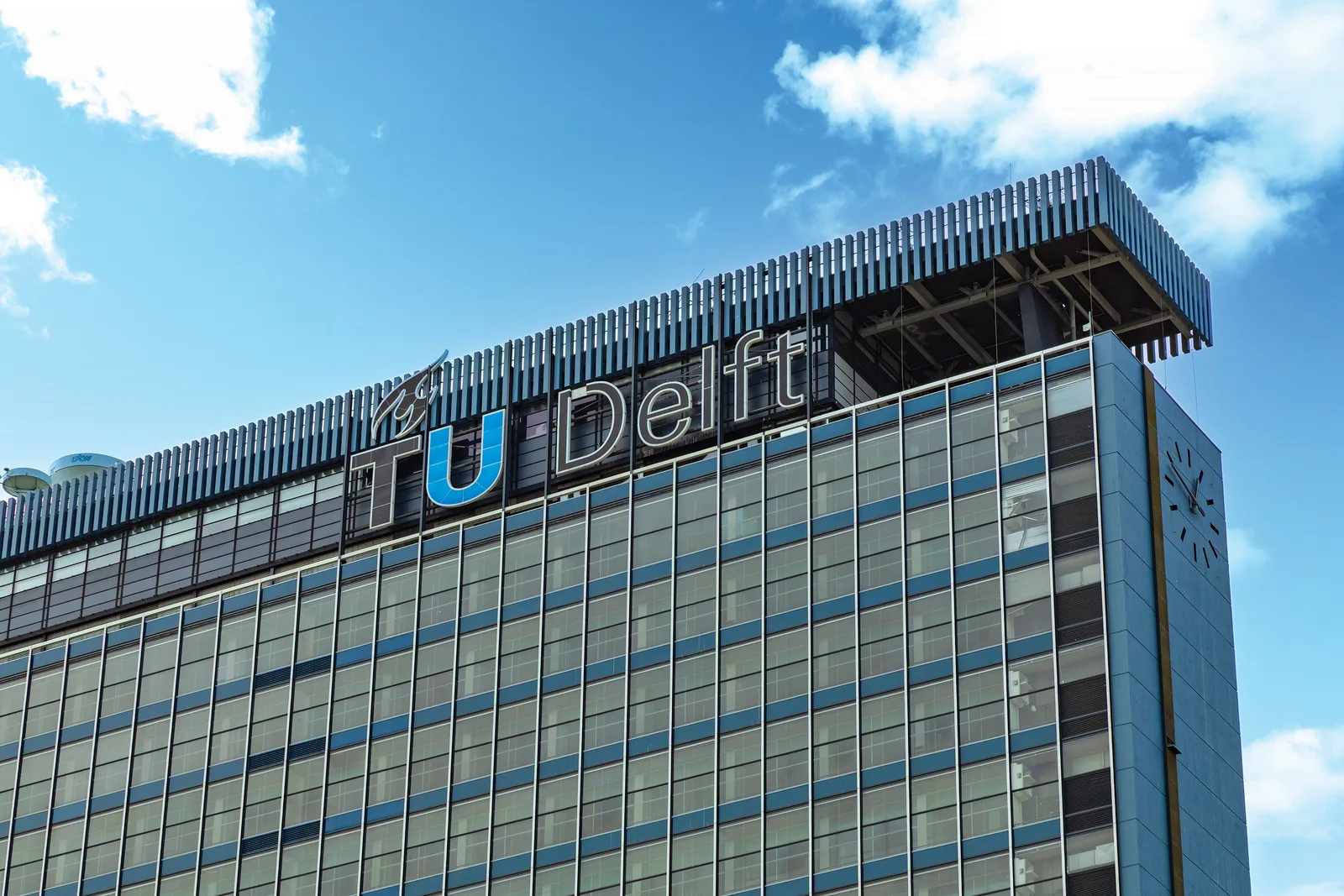
This year, Delft University of Technology (TU Delft) tied for the first place in our ranking of European universities of technology with the Technical University of Denmark (DTU). TU Delft is one of the world’s most renowned technical universities, setting educational standards for years in fields such as architecture, civil engineering, aerospace engineering, and mechanical engineering. It owes its prestige to a unique approach to teaching, where theory meets hands-on design practice and world-class research from day one.
The learning model at TU Delft moves away from passive theoretical learning in favour of Design-Based Learning (DBL) methodology and its variants – Problem-Based and Project-Based Learning. From their very first year, students combine lectures with work in interdisciplinary teams, addressing practical technical and environmental challenges. Unlike the traditional model, where foundational sciences like mathematics, physics, and chemistry are taught theoretically during the early years, TU Delft integrates theory with practical design work from an early stage.
In DBL, the learning process relies on a flipped-classroom framework. Engineering is presented as a continuous process of synthesis and problem-solving for ill-defined issues drawn from industry or for societal challenges – including the energy transition, climate resilience, and sustainable urban development. Project work gives students opportunities to apply subjects such as fluid mechanics, thermodynamics, and strength of materials right when they become relevant to the design challenge. Traditional lectures and lab sessions serve mostly as support for their ongoing work. Errors during conceptual design and simulation are treated as a natural part of the learning process rather than as failures.
At DBL, work is typically carried out in small interdisciplinary teams, helping students develop technical expertise alongside soft professional skills valued by employers. Throughout their projects, students complete the entire engineering workflow: creating schedules, managing prototype budgets, performing formal risk analyses, and presenting (hydrogen-powered) and defending their work before a panel of professors and industry partners.
One of the most visible examples of DBL methodology at TU Delft are the DREAM Teams (Dedicated Research in Engineering and Advanced Machines). These teams are based in the DREAM Hall, a purpose-built laboratory and workshop complex located at the heart of the campus. The facility is equipped with state-of-the-art machinery, including advanced CNC machine tools, polymer and metal 3D printers, autoclaves for carbon-fibre composites, wind tunnels, and specialised test rigs for hydrogen and electric powertrains.
Among the key student project teams, Eco-Runner Delft stands out for building the world's most energy-efficient urban vehicles, regularly setting world records for distance travelled on a single kilogram of hydrogen. Meanwhile, the TU Delft Solar Boat Team later became the Hydro Motion Team, shifting its focus from designing solar race boats to hydrogen-powered racing hydrofoil vessels. DUT Racing (Delft University Formula Student Team) designs and builds electric and autonomous vehicles for the international Formula Student competition. The team has won plenty of trophies and some of its vehicles have set official world records for 0–100 km/h acceleration in their category. Additionally, Project MARCH builds advanced exoskeletons design to support people with lower-limb paralysis.
The Design-Based Learning methodology delivers results. Thanks to their familiarity with real-world working conditions, TU Delft graduates adapt quickly to R&D environments in engineering companies. Many projects developed within DREAM Teams have one on to become commercial startups or university spin-offs. With support from the flagship YES!Delft tech incubator, students can bring groundbreaking propulsion technologies and advanced composite materials to market.
Campus: an innovation ecosystem
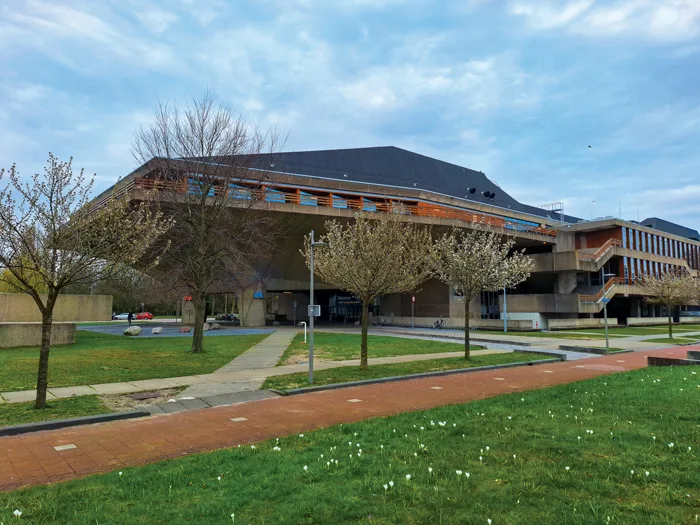
The TU Delft campus is a carefully designed, self-sustaining micro-ecosystem where urban space drives technology transfer. Spanning over 160 hectares, it is one of the largest tech campuses in Europe and combines academic teaching, applied research, and industry.
A key element in this ecosystem is the YES!Delft accelerator, operating right at the heart of the university. Recognised as one of Europe's most effective startup incubators, it has supported hundreds of engineering technology startups and university spin-offs since its establishment. The incubator provides young entrepreneurs with funding, mentoring, access to patents, and specialised prototyping facilities.
Connections with industry are further strengthened by the presence of global tech corporations and research organisations that have chosen to set up R&D centres on or near the campus. Proximity to industry partners enables commercial research projects, access to unique equipment, and private funding for technical development projects – all without leaving the university grounds. Together, all this allows the TU Delft campus to function as a research lab, business incubator, and urban space all in one, setting a benchmark for modern innovation ecosystems.
Laboratory infrastructure and world-class research
TU Delft's research infrastructure features top-tier testing equipment tailored for complex physical and digital simulations. The university houses Europe's largest aerospace engineering faculty, equipped with such facilities as flight simulators and wind tunnels. It also operates, through the TU Delft Reactor Institute, a certified research reactor. Furthermore, the campus boasts specialised hydrodynamic test basins for maritime engineering, and advanced cleanrooms for nanotechnology. The QuTech institute, a collaboration between TU Delft and the Dutch research organisation TNO, is a major global hub for quantum computing and quantum internet technologies.
Focusing on future challenges
The university's research activities address challenges such as the global energy transition and climate change, which is reflected in its strong performance in the Times Higher Education Impact Rankings. Building on the Netherlands' experience with water management, TU Delft is a world leader in hydraulic engineering, coastal protection, and water-resource management. In parallel, the university runs programs in green hydrogen, carbon capture, and sustainable construction. Another key initiative involves integrating artificial intelligence with engineering sciences through TU Delft AI Labs, combining machine learning algorithms with automation, robotics, and materials design.
International environment and high employability
A significant portion of students and academic staff come from abroad, and most master's and doctoral programmes are delivered in English. This international environment is complemented by close links with employers. A TU Delft degree carries immense weight with global industrial corporations like ASML, Airbus, Shell, ESA, and Siemens. Upon graduation, alumni smoothly transition into engineering, managerial, and research roles across the global technology sector.
Simply put – a dream university!
TU Delft in numbers
Academic Community
- Students: approx. 27,000-28,000 students (including the TU Delft Campus ecosystem – over 29,000).
- International Students: approx. 29-30% of the student body comes from abroad.
- Staff: approx. 7,500 FTE (full-time equivalents), including:
- Academic & Research Staff: over 4,400 people.
Education & Faculties
- 8 faculties (including Aerospace Engineering, Architecture, Computer Science & Electrical Engineering, Civil Engineering).
- Degree Programs: 16 Bachelor's programs (BSc) (some taught fully in English, e.g., Aerospace Engineering or Computer Science).
- Over 30-40 Master's programs (MSc) (majority taught in English).
- Publications: over 4,600 scientific publications annually.
Innovation Ecosystem & Campus
- Over 200 startups and scale-ups operating within the TU Delft Campus.
- 15 field labs and innovation clusters.
- Over 14,000 jobs generated on campus ground.
ANNA RĄCZKOWSKA